The Skills Employers Are Desperately Searching For…
and Where Kids Are Actually Learning Them
4 Min Read • Workforce Readiness
Meet Mary Dell’Erba.

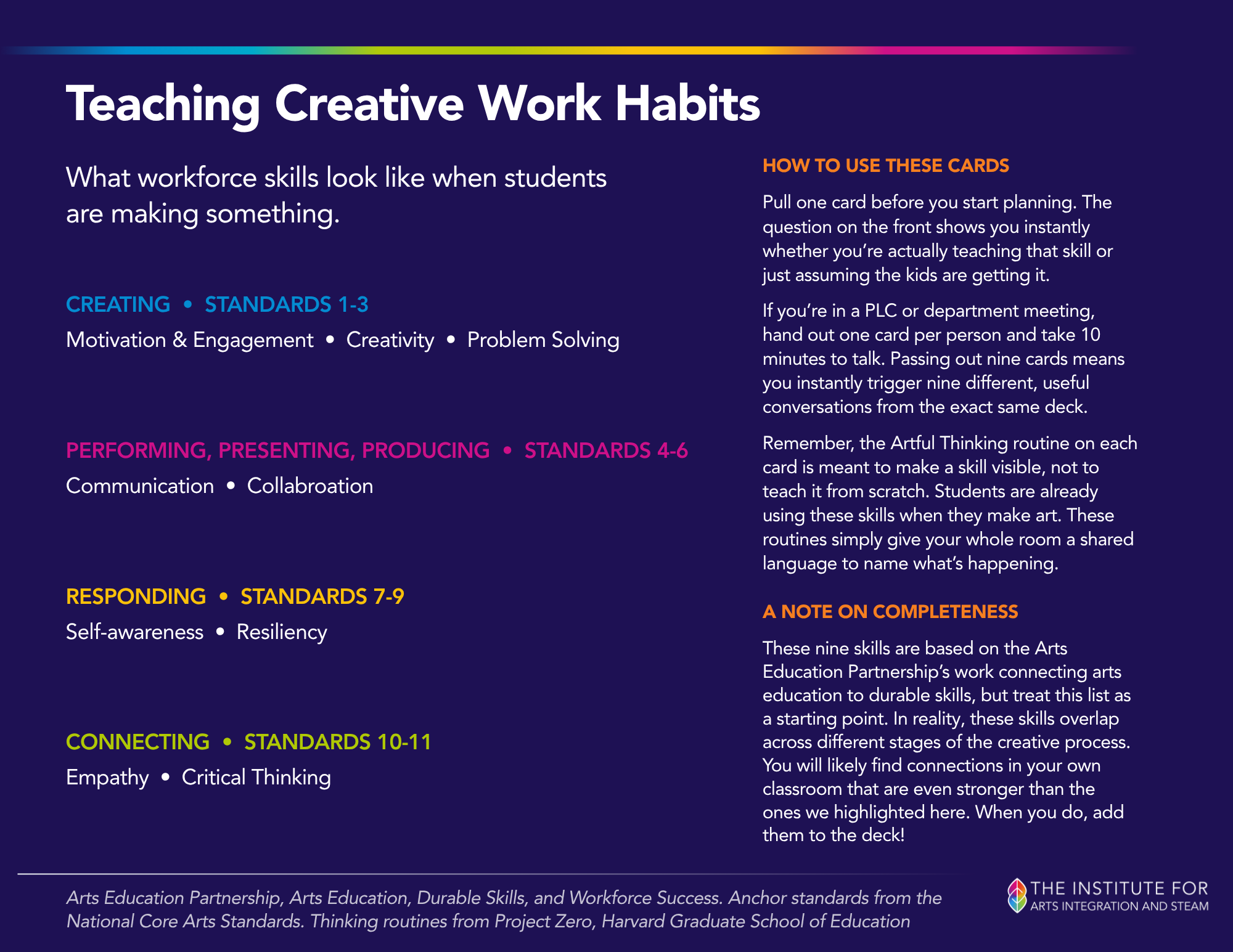
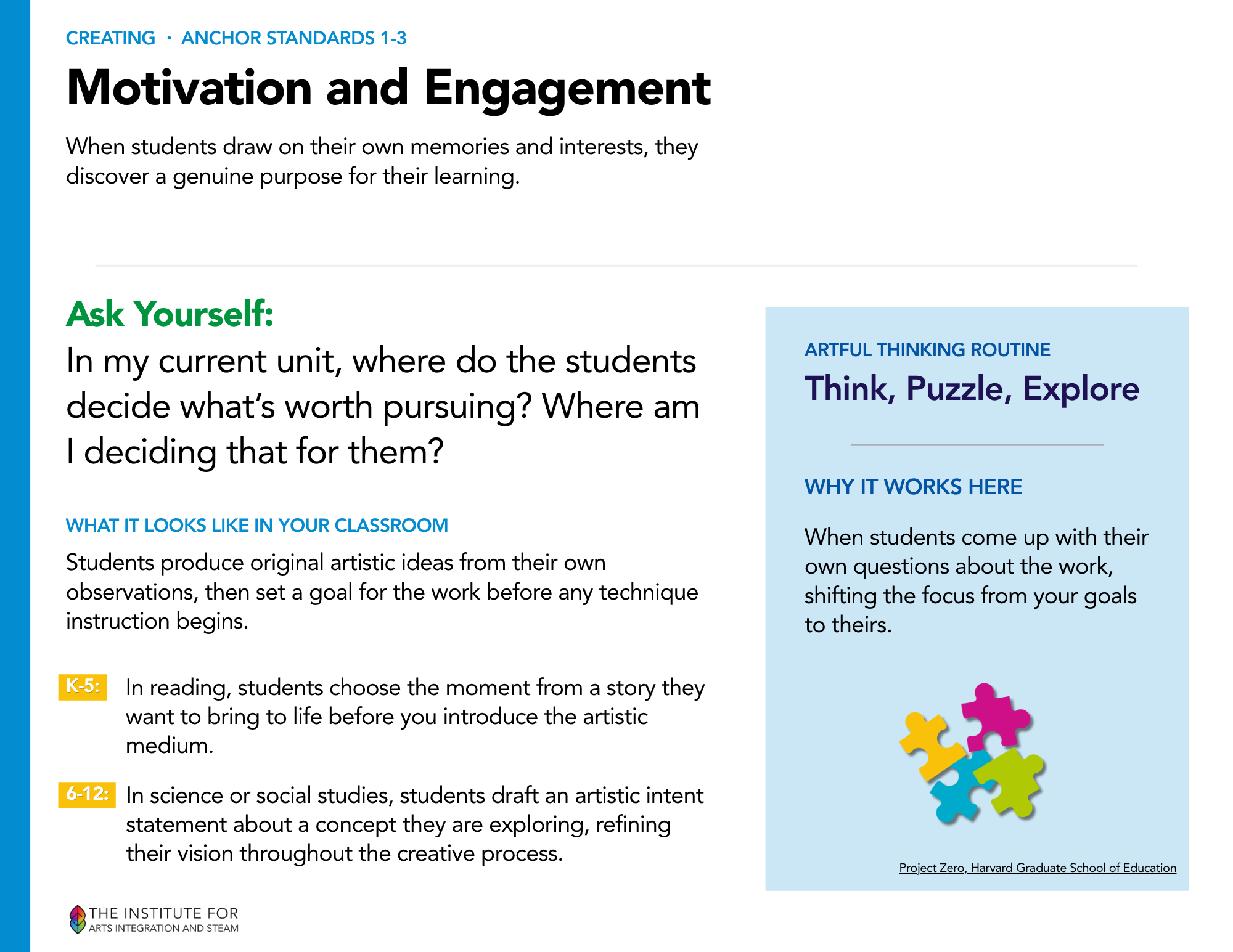
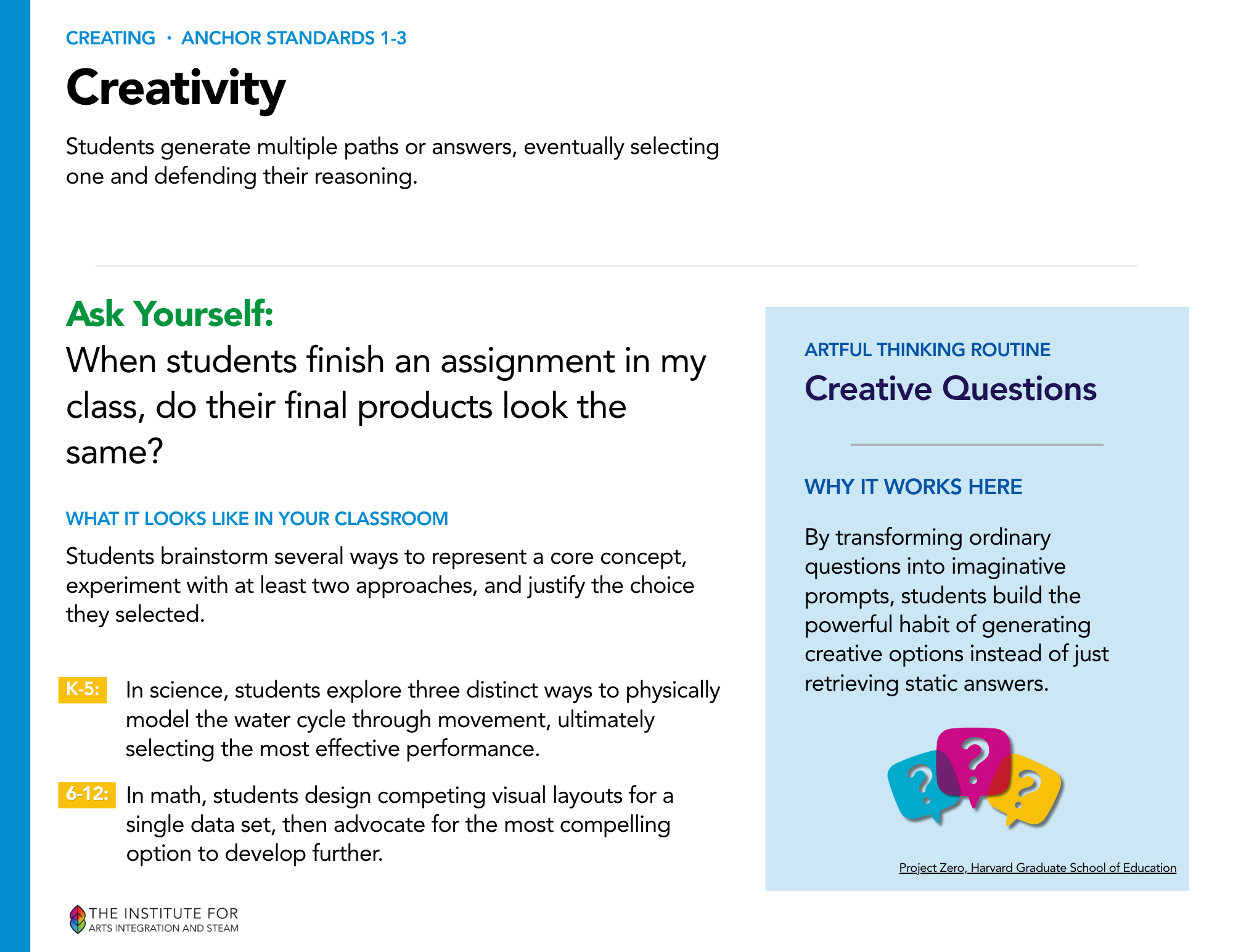
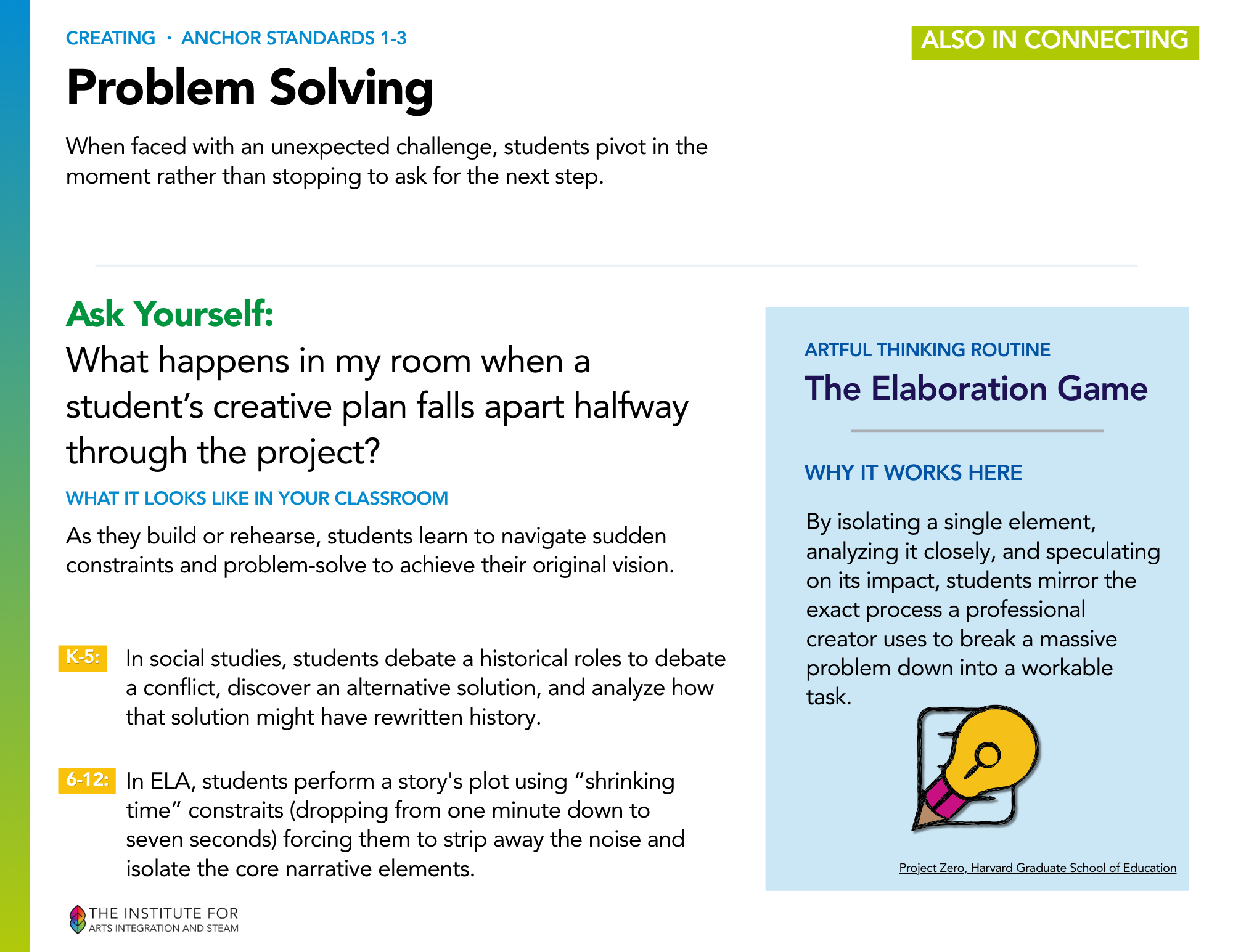
As the Assistant Director of the Arts Education Partnership (AEP), Mary works at the intersection of workforce trends, education, and policy. She understands that while much of the modern conversation around career readiness focuses on technical skills and final products, the habits cultivated in creative spaces, like learning how to navigate process, iterate through failure, and think flexibly, are the exact skills tomorrow’s jobs demand.
Q: You report that the arts contributed 4.2% of our GDP in 2023. Where is the disconnect between valuing professional art like film, music, and theatre and actually funding the training pipelines that develop the next generation of artists?
A: From my perspective, there are at least two points of disconnect. It usually isn’t that decisionmakers don’t value the arts. They just may not have the experience or data to understand the impact of the arts on education and the economy. So when competing priorities come into play, decisions often aren’t made with the intention of supporting arts pipelines.
There is also a lingering misconception that arts are only for those with “talent” and that training should be left up to these individuals to fund and pursue on their own. We know that the arts are for everyone regardless of whether or not they will go on to have a professional career in the arts. So I think it comes down to proximity and perception of the arts, and ideas about who is responsible for funding and creating pathways.
Q: The Wallace Foundation research and the 94% figure you cite both point to community arts programs preparing people for the workforce. How do we disrupt the cultural story that these programs are extracurricular rather than essential?
A: The data is telling, but the power is in the stories. How do we uplift stories about how these programs are life changing? And, how do we tell that story in a way that articulates the specific value of the arts? A common narrative is that similar benefits can be found through sports or other community programming. While true, there is nuance about the unique benefits of the arts that can best be told through making these programs and benefits more visible..
Q: Since publishing this paper, what reactions have you gotten from people outside the arts field, whether that’s business leaders, superintendents, or policymakers?
A: Durable skills and the language around these skills has begun to be used consistently in the education policy space. We have shared the report with Commissioners of Education Commission of the States, and are working to convene this group of policymakers at our Annual Convening in September. There is definitely alignment surfacing from the report and general education priorities and we’re hopeful we can continue to help foster these connections!
Q: Competency-based learning and apprenticeships both depend on closer relationships between families, students, and schools. In a moment when AI tutoring and standardized testing are becoming the dominant measures of success, how can arts education help shift that narrative? Are you seeing any state or district actually doing this well right now?
A: We talk a lot in the arts about defining success by the process of learning as well as the product, sometimes the product being the least important outcome! As AI tools (particularly generative AI) become more prevalent, we need to think differently about how we assess learning outcomes across disciplines and what is most valuable for students. There is a huge opportunity for other content areas to learn from the decades of practice the arts field has in assessing the creative process in addition to product of learning. I really believe arts educators should be leading this narrative shift.
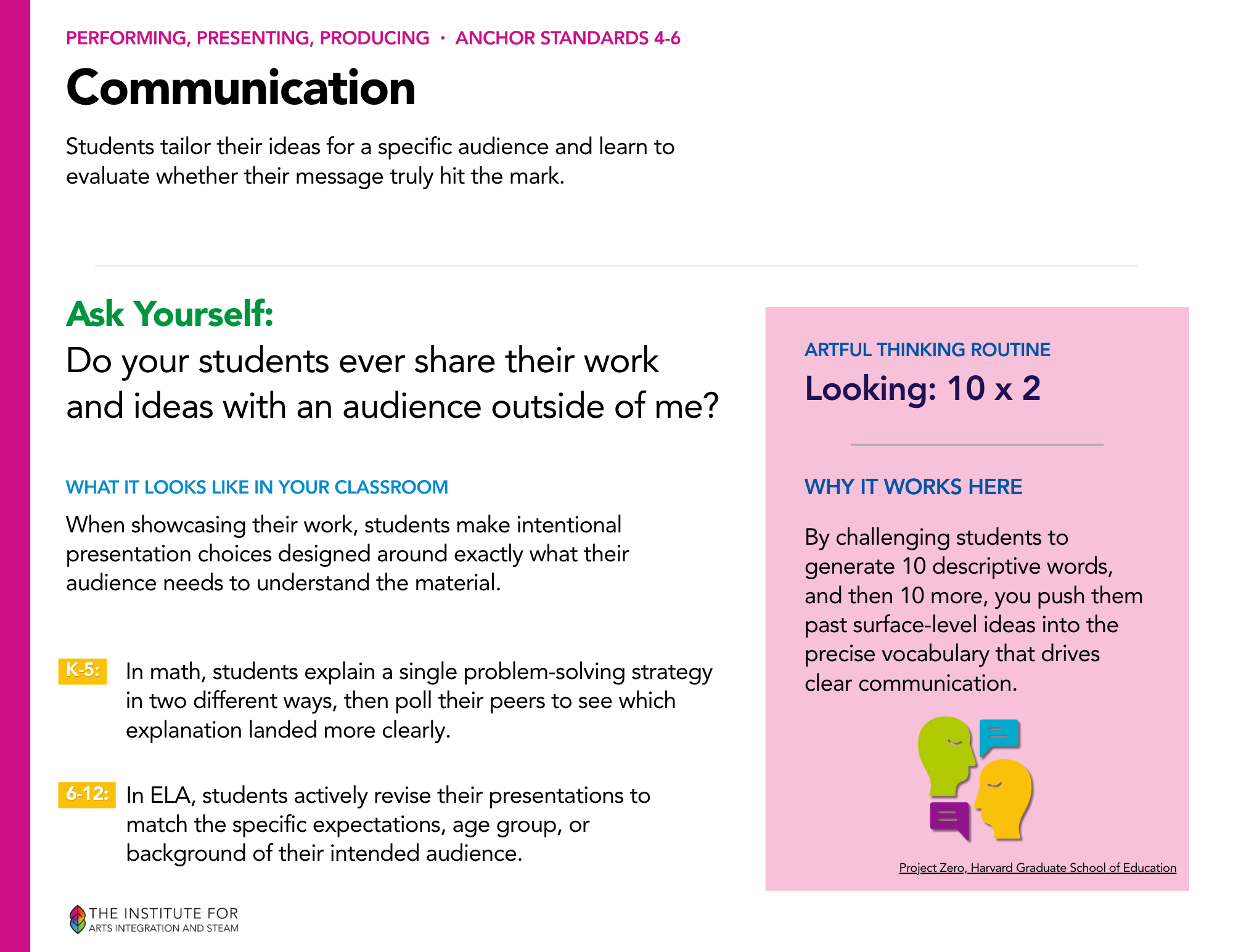
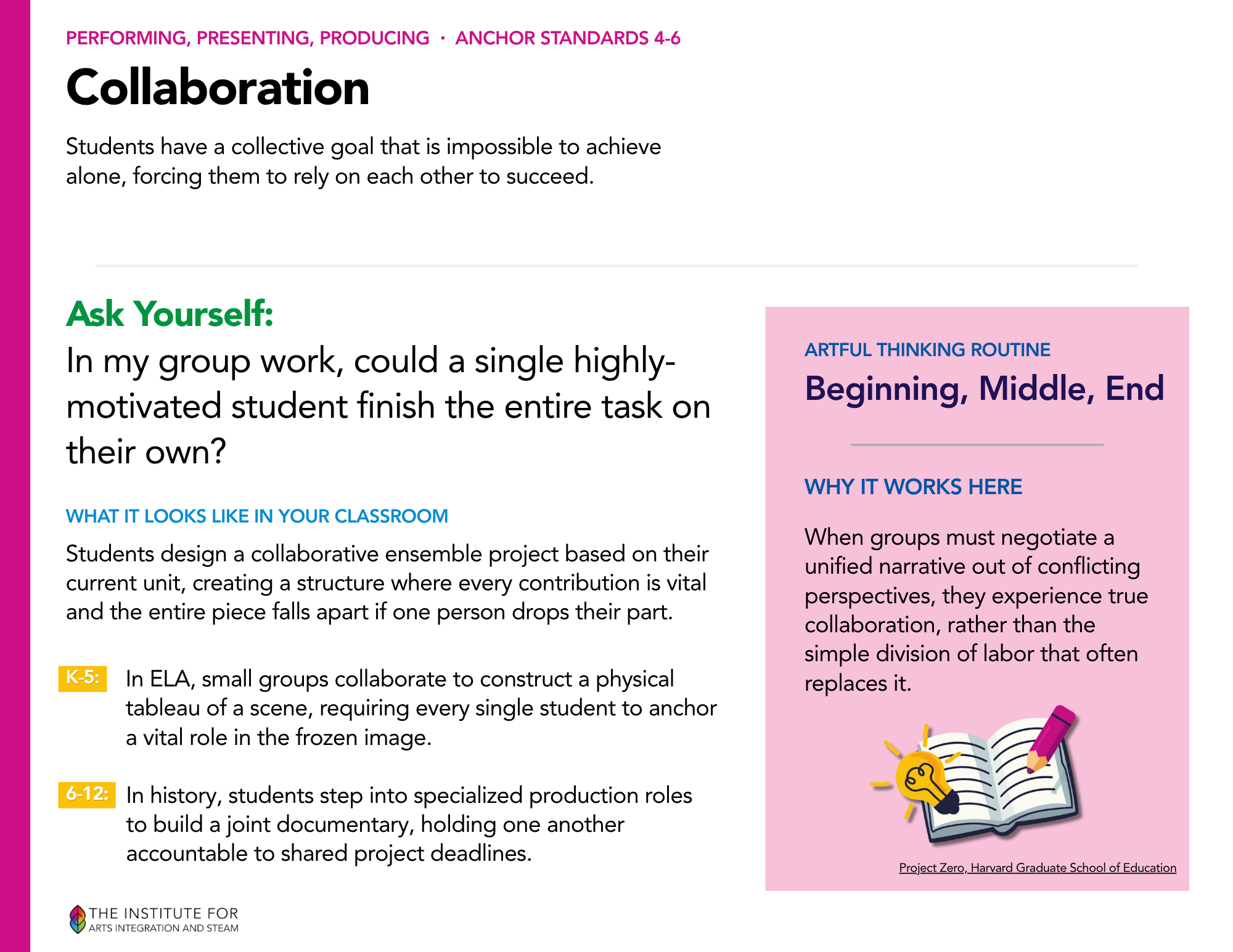
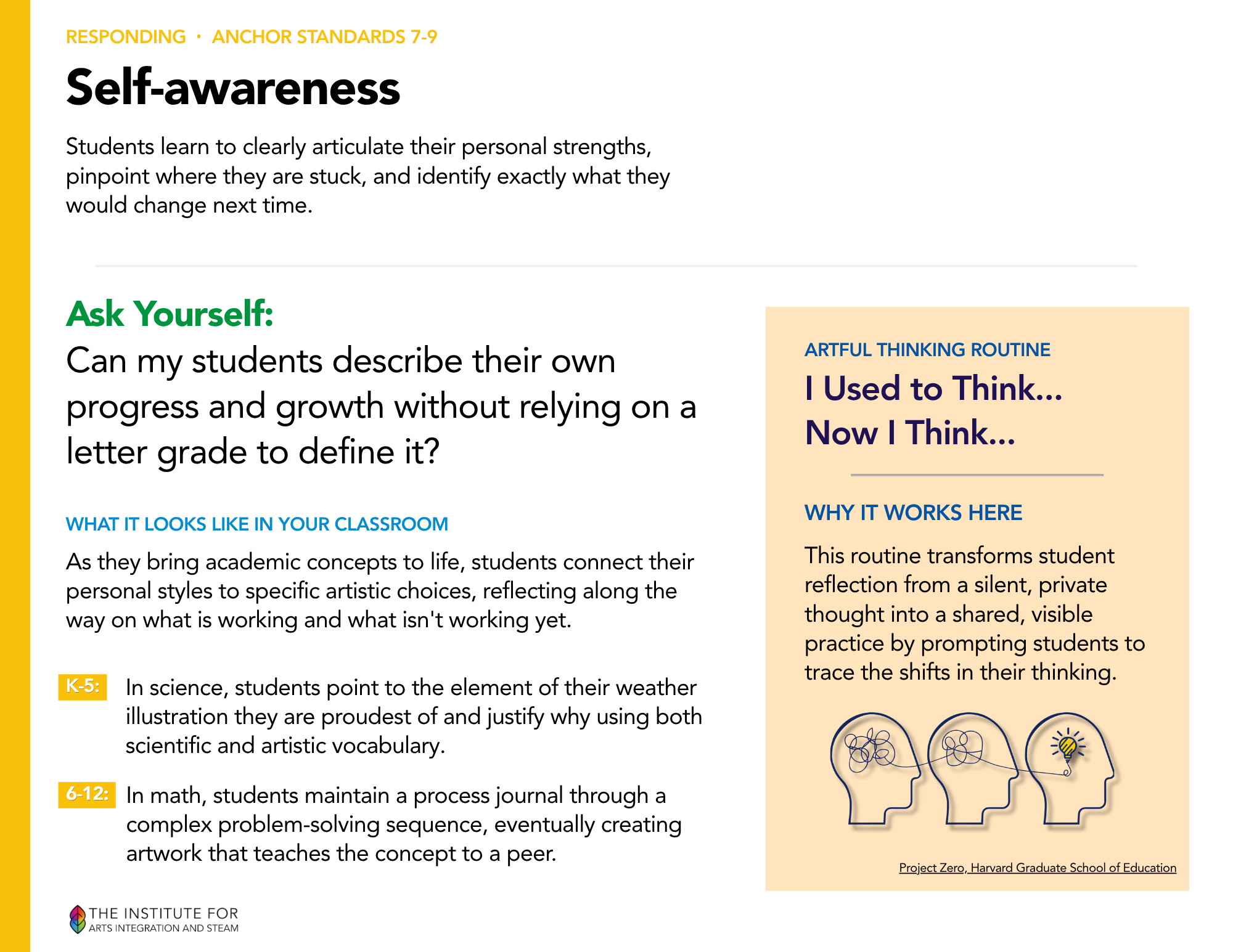
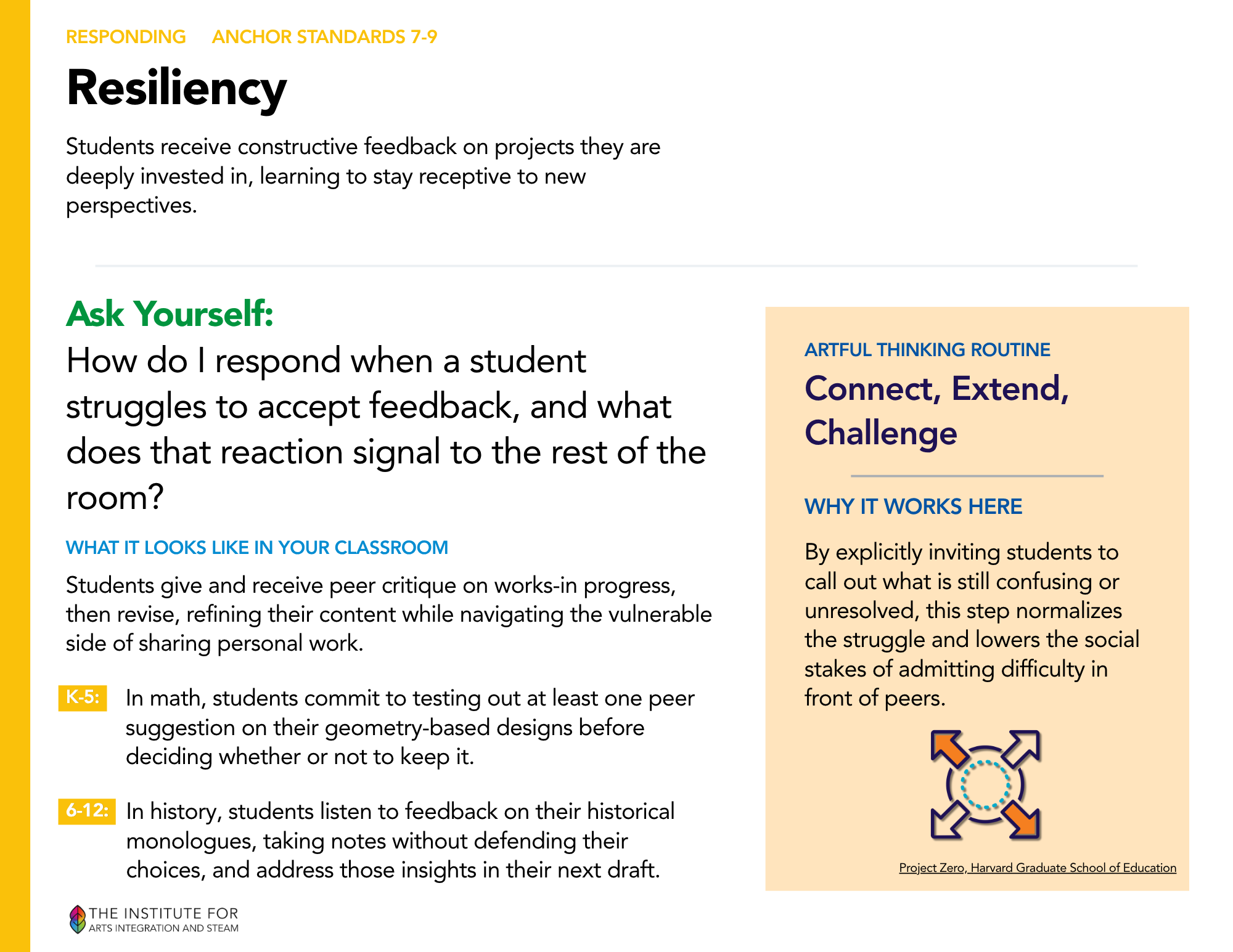
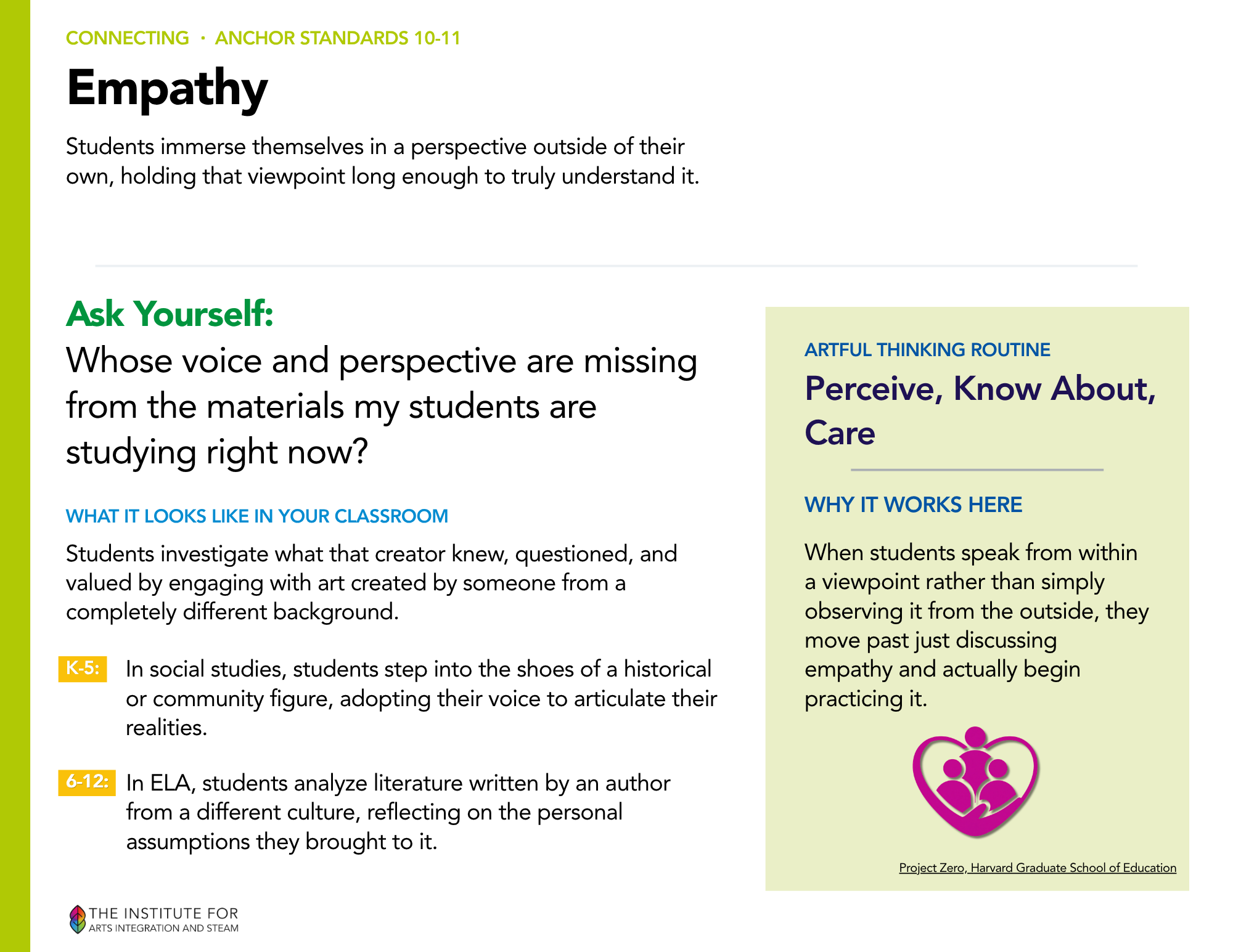
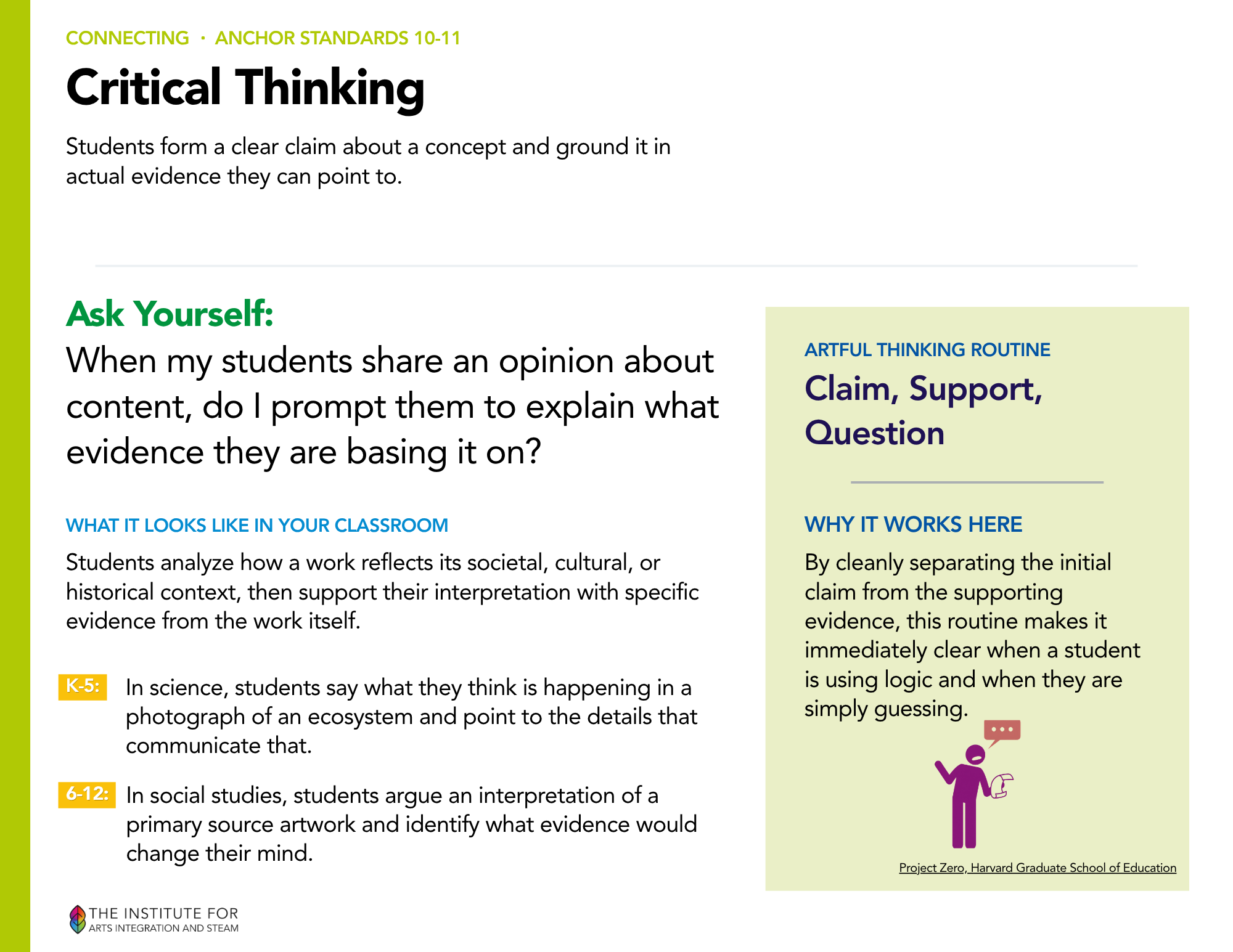
Q: How do the durable skills benefits you outline in the anchor standards charts show up differently in a dedicated arts classroom versus an arts integrated lesson in math or science?
A: I don’t think that the benefits show up differently, but I think the transfer of the skills becomes even more apparent and applicable. It also offers additional opportunities for students to practice the skills they learn in their arts classrooms. The benefits can multiply!
Q: Your Portrait of a Graduate research found durable skills in 95% of the 272 district frameworks you looked at, but you also note that most lack implementation or measurement guidance. If a state asked you tomorrow how to actually measure whether students are developing these skills, what would you tell them?
A: I would direct the state to others who have developed implementation frameworks and professional development around their portrait of a graduate. For example, Utah’s Portrait of a Graduate first states that “these are aspirations not necessarily meant to be quantified and measured” and are followed with model rubrics and exemplars. Similarly, Kentucky’s Portrait of a Learner framework is complimented by a guidance document that includes information on developing competency, performance outcomes, and indicators. North Carolina offers similar rubrics and suggestions for use, with professional learning modules to support implementation… including modules for the arts! This will look different for each state, but these are three examples of how the states have moved beyond the POG framework as a poster on a wall to something integral to education across the state.
Q: If a state legislator or local school board member reads this report and only does one thing differently on Monday morning, what would you want that to be?
A: As I mentioned earlier, decisions that impact education aren’t always informed by those with experience in the arts. Ideally, a policymaker would read the report and realize they need to invite arts stakeholders closer to decision making. This might mean calling their state or local arts representative at the education agency, scheduling a meeting with the state or local arts council, or sending an e-mail to their arts advocacy organization inviting them to provide testimony during a meeting.
Q: What’s the next question AEP wants to chase after this report, the thing you didn’t have room or data for here?
A: The report offers a starting place related to policy considerations to expand durable skills development through arts education. AEP would welcome the opportunity to work closely with state leaders looking to take action; offering personalized technical assistance, additional research, facilitation support, connections to arts educators and partners in their states. This is the work that can’t be done with a report that is so important.